


Speed limits
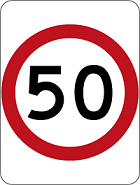 A speed limit sign has a number in a circle on it showing the maximum speed in km/h that you may drive your vehicle on the road in good conditions. In poor weather or hazardous conditions, you should drive at a lower speed to suit those conditions. You must not exceed the signposted speed limit even when overtaking.
Find out more about what Queensland's traffic signs mean.
Learner and provisional licence holders
There are not specified reduced speed limits in Queensland for learner or provisional licence holders. You should drive according to the speed limit and the conditions for the road on which you are driving.
Speed limits in local streets and built-up areas
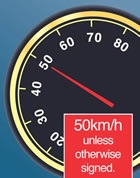
The speed limit in built-up areas in Queensland is 50km/h unless otherwise indicated by signs.
A 'local street' or 'built-up area' has access to private property and/or limited neighbourhood traffic movement. Some industrial and commercial areas also have local streets.
Roads that carry traffic through suburbs and across towns have a speed limit of 60km/h or higher. The speed limit on these roads is clearly signed.
Speed limits outside a built-up area
The default speed limits on a road outside a built-up area is 100km/h unless otherwise signed. On a small number of higher standard roads, you may be allowed to drive at a maximum speed limit of 110km/h, but only if a speed limit sign on the road shows that speed limit.
Heavy vehicles over 12 tonnes GVM or buses over 5 tonnes GVM are restricted to travelling a maximum speed of 100km/h, regardless of any higher speed limit that may be shown.
Area speed zones
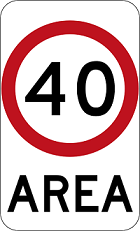
The speed limit area sign shows you the speed limit you must travel within the zoned area. A speed limited area is a network of local roads with these signs placed at the entry and exit of the area. An end speed limit area sign will tell you when you have left the speed limited area.
School zone speed limits
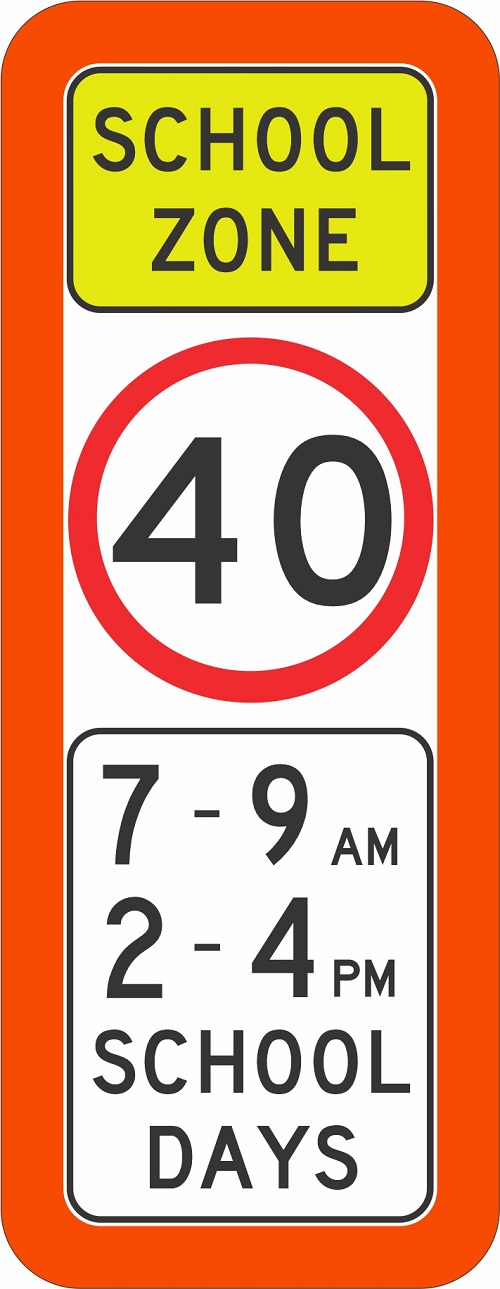
When you are entering a school zone, you will see a school zone sign. Find out more about school zone speed limits.
Variable speed zones
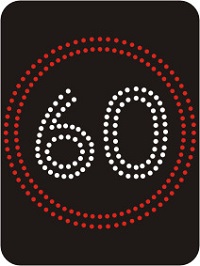
A variable speed zone has different speed limits applying in the zone at different times of the day or days of the week. These different speed limits may be shown by special speed limit signs that may be electronically controlled.
A variable speed limit zone may also be applied on a motorway, long bridge or in a tunnel to allow the speed to be changed if required. A variable speed limit zone is shown through the use of electronic variable speed limit signs and selected static signs. If an electronic variable speed limit sign is blank you must follow the speed limit on static signs.
Reduced speed limits through roadworks
Roadworks improve the roads for everyone, ensuring a safer, more efficient and more convenient road network. Find out more information about reduced speed limits and safety at roadworks.
Warning sign with advisory speed limit
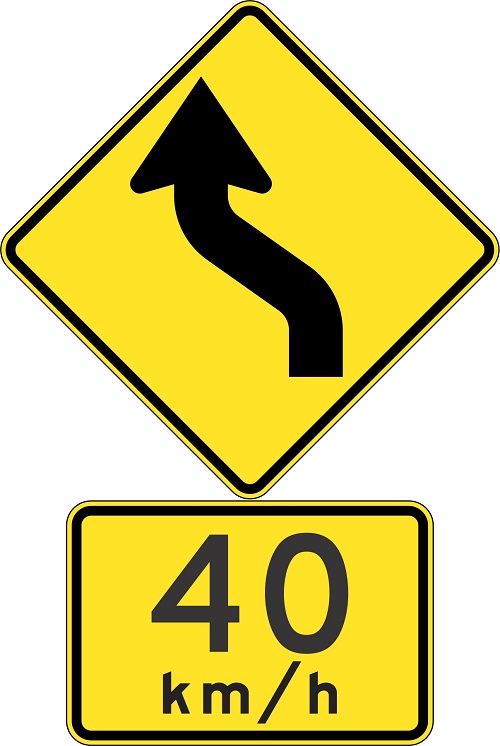
A warning sign tells you the recommended speed limit through the curves ahead in good driving conditions. It is placed where extra caution is need and where the speed of your vehicle should be reduced temporarily.
How speed limits are set
The Department of Transport and Main Roads and local governments set speed limits in Queensland within strict guidelines to ensure limits are consistent and credible.
These factors are considered when determining speed limits:
- the number and configuration of traffic lanes
- housing density and type of development
- the amount of on-road parking
- access to property arrangements
- traffic signals
- patterns of crashes that have occurred.
A speed limit may be lowered on a hazardous section of road if it's believed it will help reduce the number of crashes.
Speeding fines and demerit points
Speeding is defined as driving at a speed higher than the posted speed limit or at a speed that is inappropriate to the driving conditions (such as rain, fog, traffic volume, traffic flow).
Speeding consequences include:
- receiving a fine
- receiving demerit points
- losing your licence
- killing or injuring yourself, loved ones or other road users.