

Water
Clean water is vital for Queensland’s creeks, rivers and oceans –and for the plants, animals and communities that depend on them. When we build and maintain roads, we take responsibility for keeping waterways healthy.
Why it matters
Polluted water can harm fish, wildlife and ecosystems. Problems that can damage aquatic life and affect coastal areas such as the Great Barrier Reef, include:
- cloudy water from soil and sediment
- excess nutrients that cause algal blooms
- pollutants such as heavy metals, hydrocarbons and chemicals.
What we do
Every project includes an environmental assessment to identify risks and set management measures. We:
- stop erosion at construction sites
- design drainage systems to reduce sediment entering waterways
- prevent polluted runoff from roads
- use water-sensitive urban design principles when practicable.

Marine pollution
Queensland’s coastline and the Great Barrier Reef are precious. Maritime Safety Queensland (MSQ) leads the response to for ship-sourced pollution, including oil spills. Learn more at MSQ’s marine pollution page.
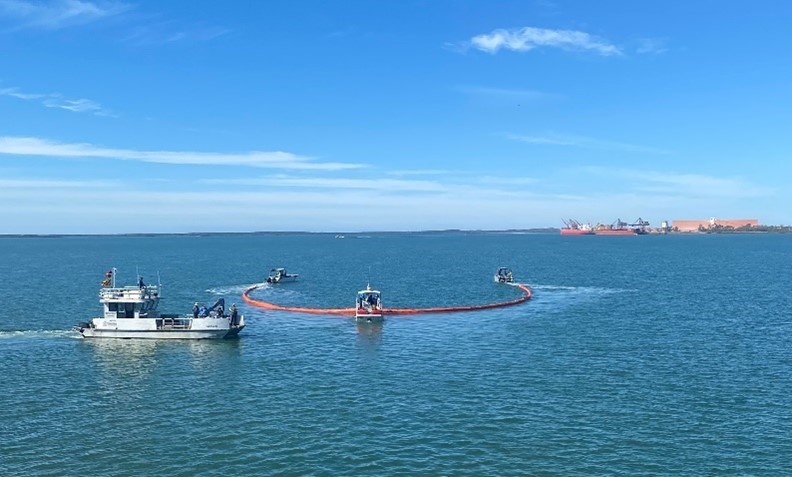
MSQ crews deploying oil containment boom off Gladstone during Exercise CABIN. A support vessel stands by with oil retrieval equipment.
Our goal is simple: keep Queensland’s waterways clean and healthy for future generations.
- Last updated
- 5 February 2026